· Tea production technology · 2 minutes
Economies of Scale in Sencha Production
Mechanization of sencha production in Japan began in the 1920s. By the 1960s, systems streamlining tea production were already quite commonly used. After initial preparation of the leaves, such systems allow for faster rolling, steaming, and drying of tea.
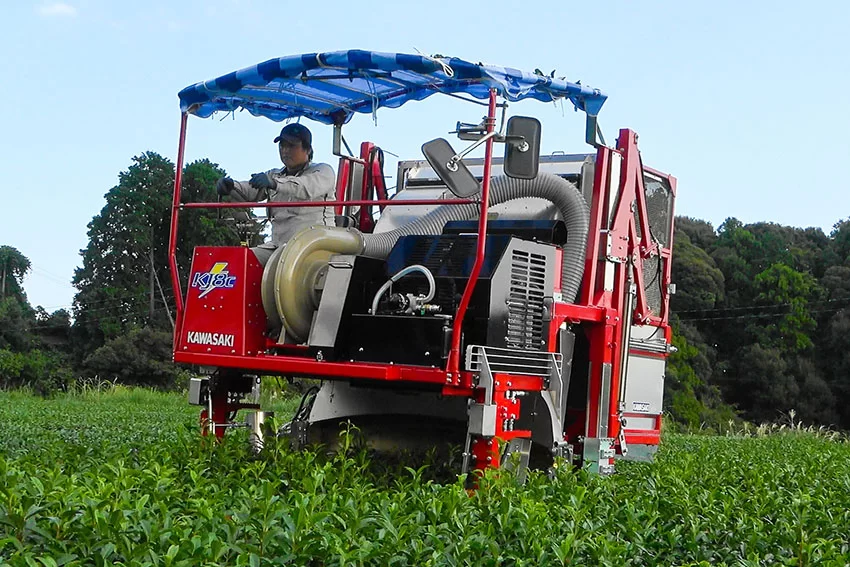
The first machines could process 6 to 15 kilograms of raw leaves in a single production cycle. Later, as demand grew, more efficient systems were developed.
In an article from the Journal of Food Process Engineering, the authors compared the effect of production scale on the content of bioactive compounds and the quality of sencha tea. After comparing Kawasaki Kiko machines with batch sizes of 15, 60, and 120 kg, the largest statistically significant differences were observed between the extreme cases.
The leaf structure in 15 kg batches is the most damaged, while in the case of the largest batch, some leaves remain whole and incompletely rolled. (I would gladly include a comparison image here, but Wiley’s copyright is so restrictive that doing so legally is nearly impossible.)
As for polyphenol content, something interesting occurs — the total content of these compounds (from methanol extraction) increases with batch size. However, when brewing with water, the situation is reversed — tea from the 15 kg batch contains as much as 97 mg GAE per gram of tea, while the largest batch yields only 65 mg GAE/g. (GAE stands for gallic acid equivalent, a single indicator that describes the content of various polyphenols in a solution by comparing the sample result against a calibration curve for gallic acid.)
This difference may result from the varying degree of leaf damage. Although leaf damage causes oxidation of some polyphenols, it simultaneously facilitates the extraction of the remaining polyphenols into water, increasing the potential antioxidant activity of tea from small production batches.