· Tea production technology · 7 minutes
Temomi - traditional Japanese hand processing of tea leaves
Today, the most popular Japanese tea is sencha, which accounts for more than half of all tea produced in Japan. But until the 18th century, such tea - tightly rolled into straight, long emerald-green needles with a fresh aroma, bright, transparent infusion, and a taste with distinct umami notes - did not exist in Japan.
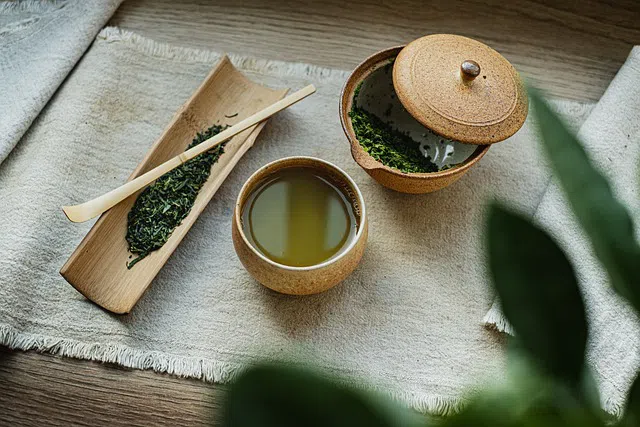
There was an excellent powdered tea for the nobility, the raw material for which was selected from pre-shaded bushes to reduce bitterness, and a more crudely processed loose-leaf tea for the poor, which was sometimes lightly rolled without concern for giving the tea a beautiful shape, and sometimes just dried. Both steam and wok heating were used to halt oxidation, but the process was often incomplete - the tea would darken, its aroma and taste lacked freshness - overall, it was a much more crude product than, for example, modern bancha. But at the end of the 17th century, in the village of Yuyadani (now Ujitawara (宇治田原町) in Kyoto Prefecture), a man was born who changed everything - he created the appearance of Japanese green tea as we know it. His name was Soen Nagatani (永谷 宗円).
Nagatani Soen set himself the goal of perfecting tea leaf processing to create an affordable yet high-quality tea. To achieve this, he combined various techniques known at the time into a continuous technological chain and refined each step, which took a total of fifteen years.
The main feature of Nagatani’s technique was the prolonged shaping of tea with simultaneous drying: the kneading and twisting of tea leaves was carried out on a heated table, and over several hours of work, the tea gradually lost moisture. Now this aosei sencha seiho (青製煎茶製法) - “method of producing blue sencha” - is better known as temomi (手揉み), which simply means hand rolling.
It is believed that the new “blue” sencha created in 1738 was too different from the ordinary “black” kurosei-sencha and did not immediately gain popularity - tea merchants did not want to deal with it. Eventually, a merchant from Edo named Yamamoto Kahei believed in it, and the combination of Soen’s skills with Kahei’s commercial talent brought them success. It is said that the Yamamoto family paid the Nagatani family for Soen’s invention for almost an entire century after his death. Some aspects of Nagatani Soen’s legend raise doubts among tea historians, but in Ujitawara they believe in his unique historical role and celebrate his memory - his house (although heavily rebuilt) has been converted into a museum - Nagatani Soen Seika (永谷宗円生家), and a shrine near his house is named in his honor - Chasoumyou jinja (茶宗明神社).
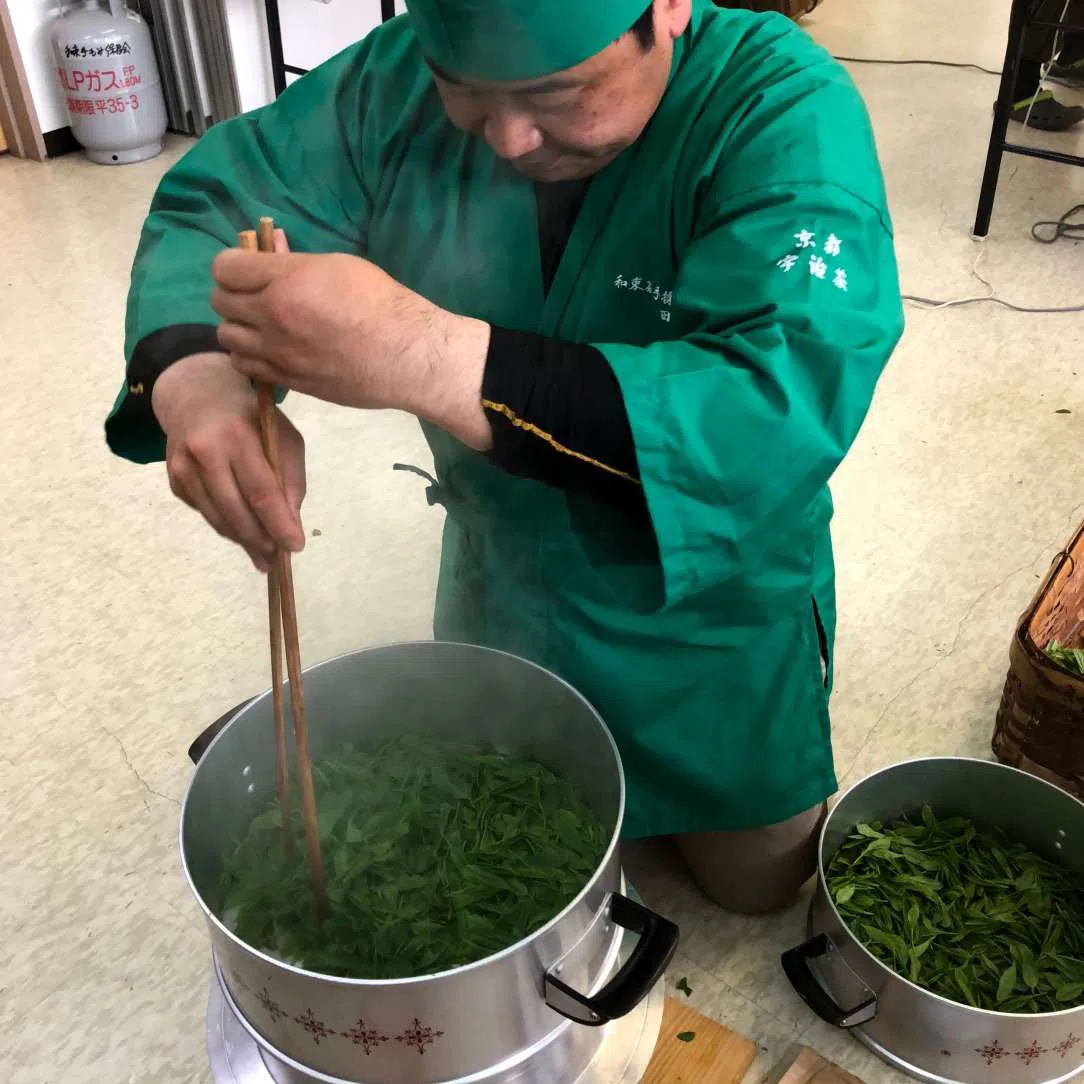
According to the technology developed by Nagatani, after a brief intensive steaming - Jonetsu (蒸熱): the leaves are placed on a special warm wooden table (in the old days heated by charcoal, now - of course, by electricity), which is called hoiro (ほいろ).
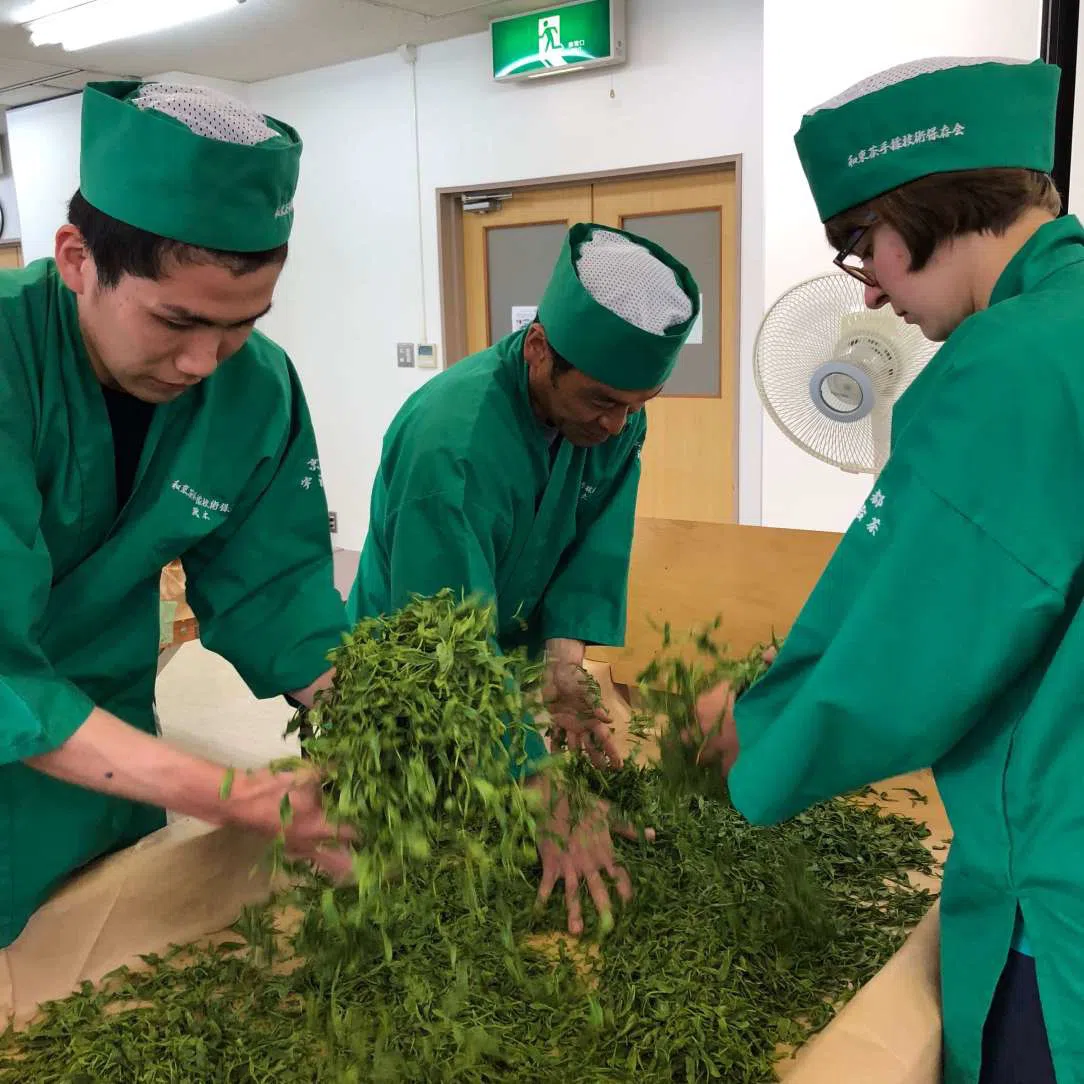
The hoiro is covered with a dense paper sheet - jotan (助炭), and the temperature on its surface can reach 110°C. The first operation is called haburui (葉ぶるい), or rokiri (露きり): the leaves are lifted from the jotan, shaken, and placed back on it again; this lasts 30 to 50 minutes. During this process, the leaves lose up to 30% of their moisture and become less flexible, which is necessary for the subsequent kneading - kaitenmomi (回転揉み), which lasts 40-50 minutes. The mass of leaves is rolled across the table, gradually slowing the movements and increasing the pressure; it is important not to use arm strength but the weight of the entire body, smoothly shifting the center of gravity - it is similar to dance or Taijiquan.
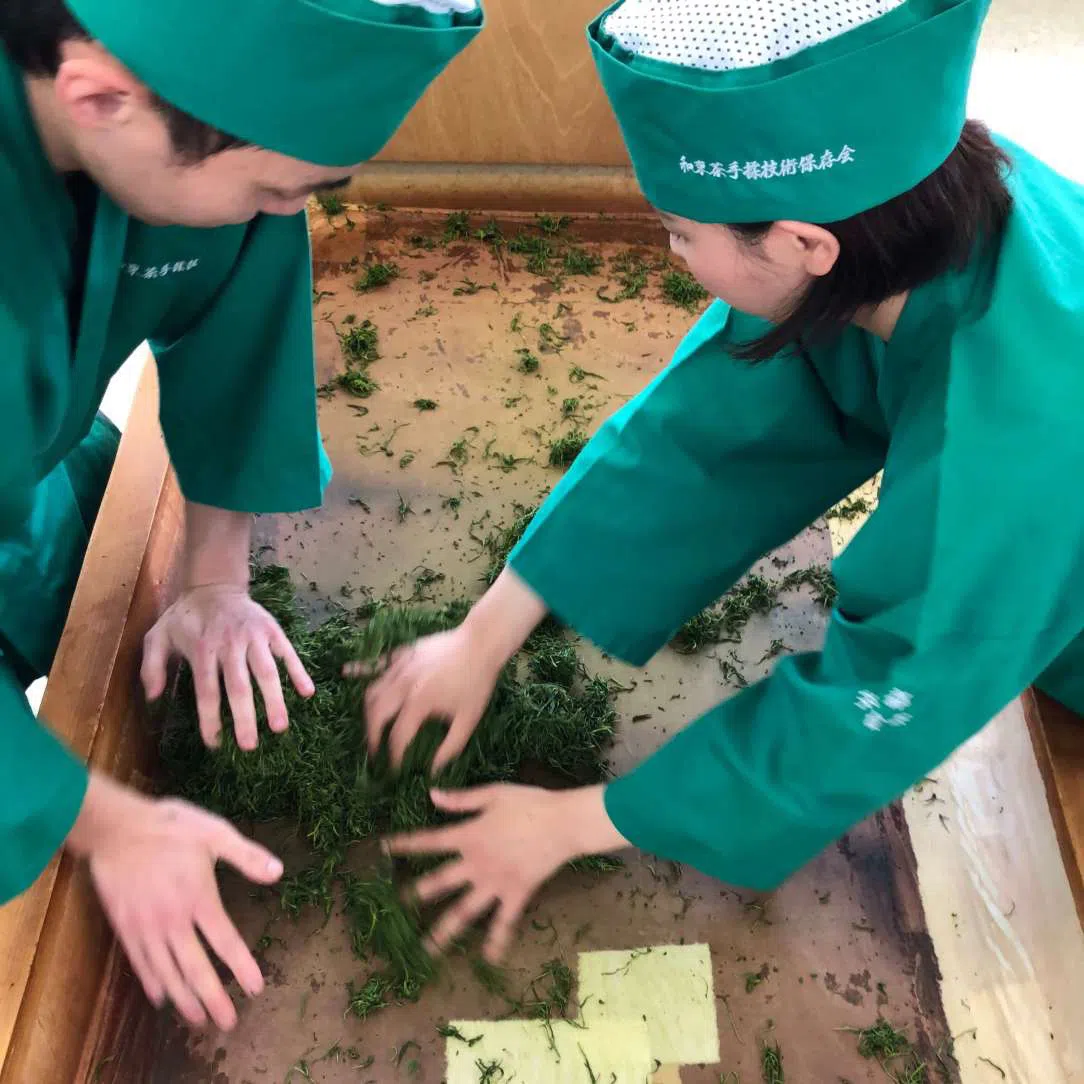
Next comes nakaage (中上げ) - cooling to redistribute moisture within the leaves; for this, the tea is removed from the table while the jotan is cleaned and dried, and tamadoki (玉解き) - untangling clumps to separate the leaves from each other. The next shaping stage is momikiri (揉み切り): small portions of leaves are rubbed between two palms for another half hour. The tea begins to take on an elongated shape, but it is still far from straight needles.
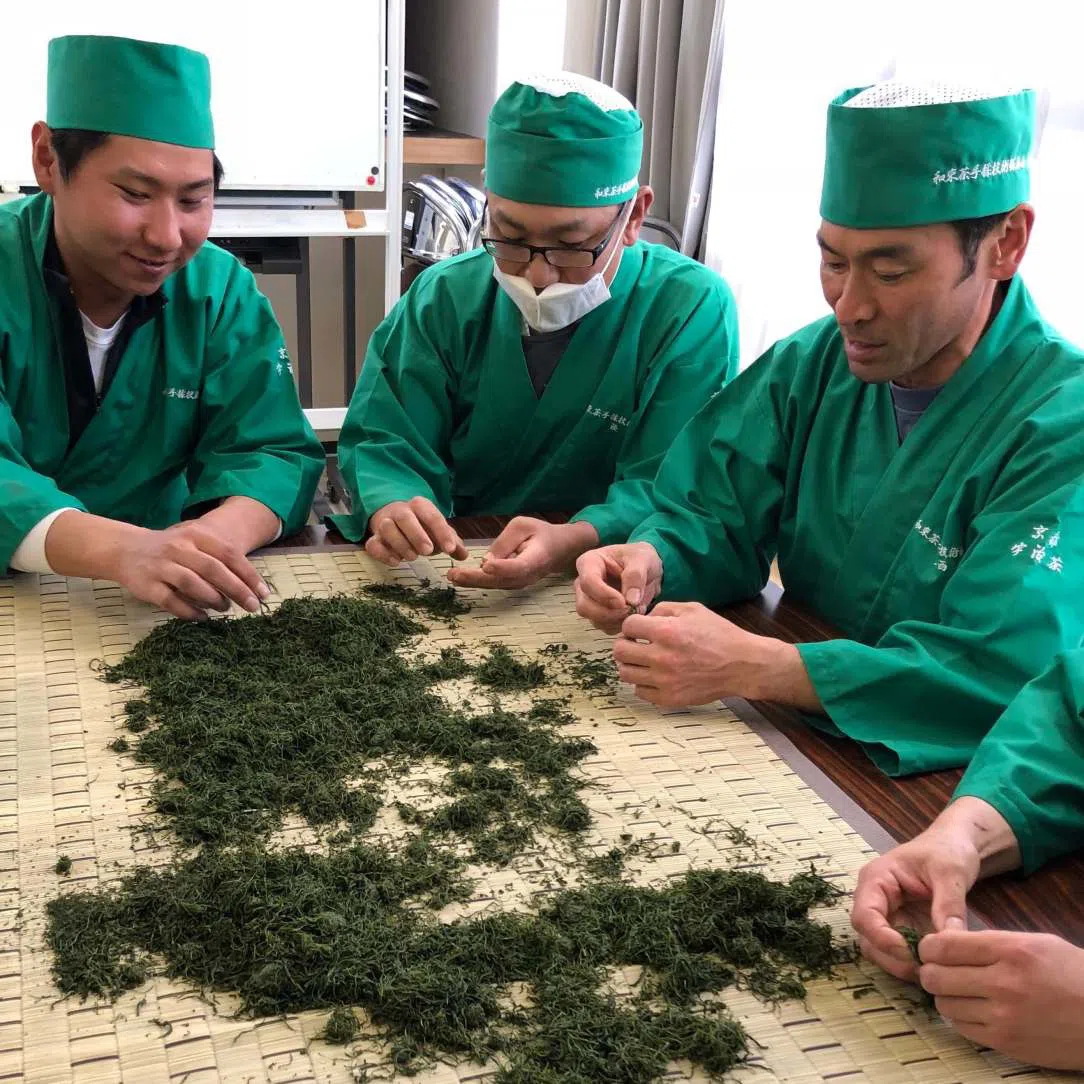
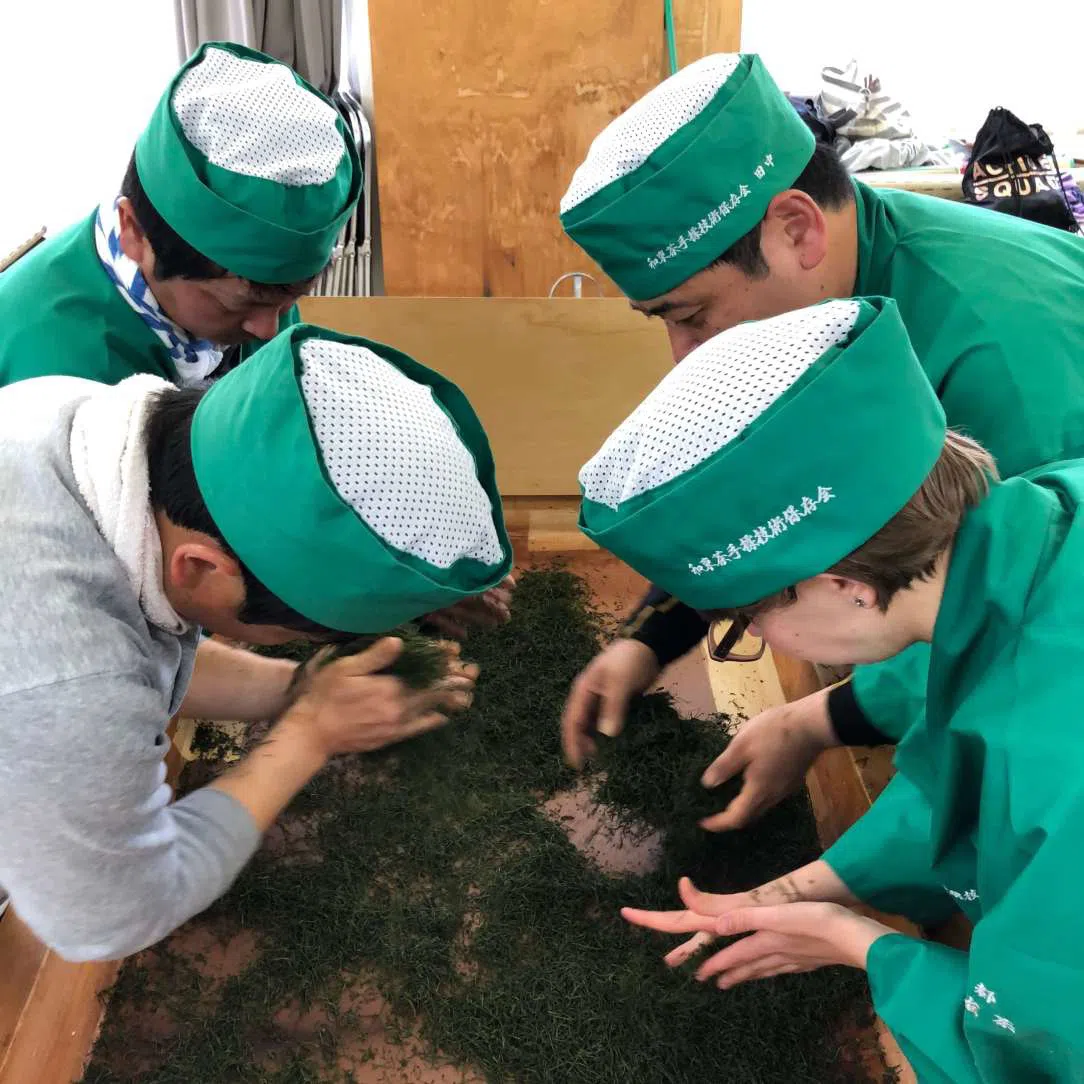
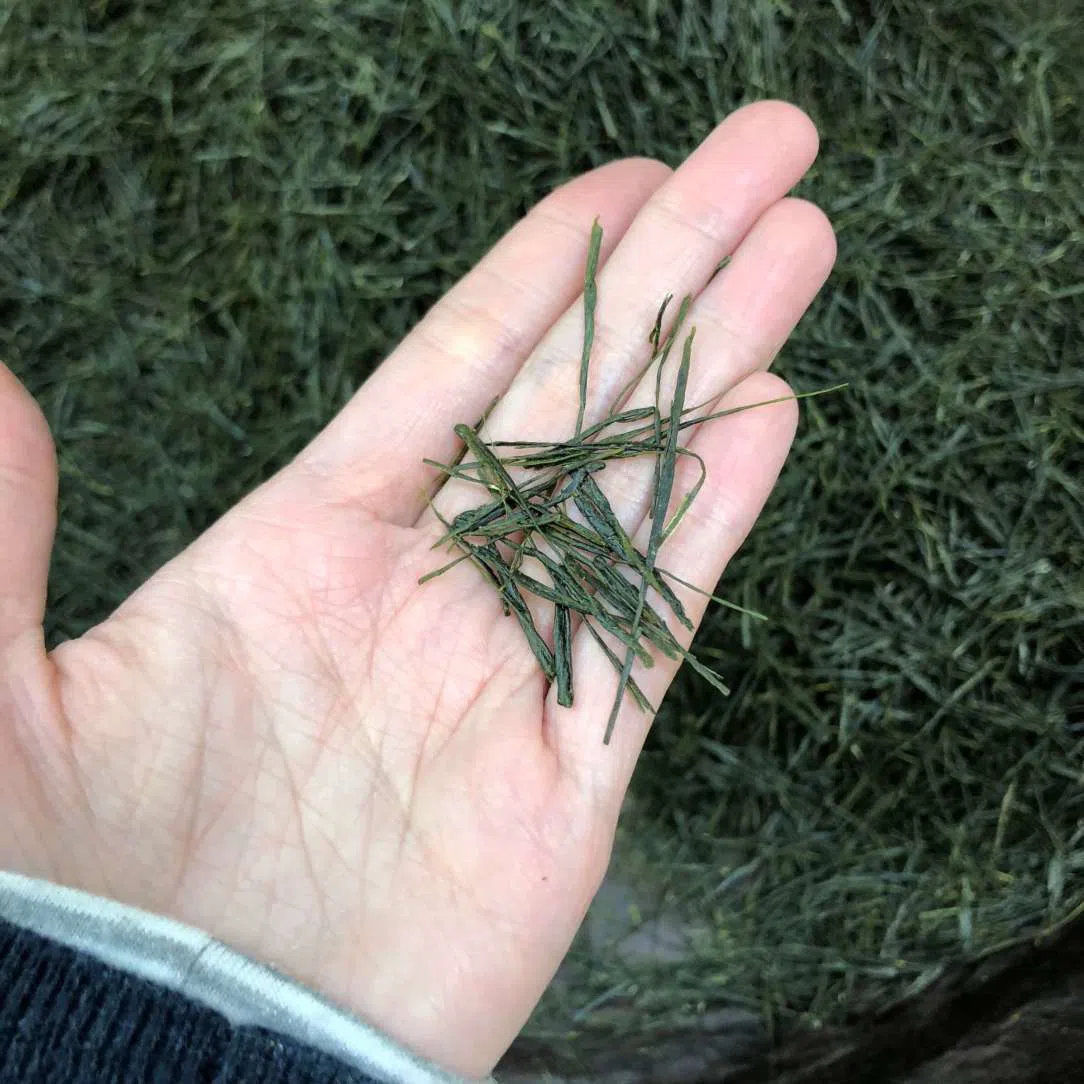
The next processing stage is dengurimomi (でんぐり揉み): the leaves are kneaded, shifted, and pressed against each other in a strictly defined manner; this lasts 30-40 minutes. At this stage, the tea turns dark green and an intense, deep aroma appears. The final stage is shiagemomi (仕上げ揉み), in which the tea receives its characteristic needle shape. Specific methods vary by region, but the most popular option is kokuri, where the tea is gathered into a dense pile, pressed with both hands, and divided into two or three parts, then these parts are swapped, gathered back into a pile, and the operation is repeated until all the tea leaves stretch in the direction of the hand movement; this takes 20 to 40 minutes. After that, it only remains to lightly dry the tea, which can be done directly on the hoiro (at this point its temperature drops to 70°C) by spreading the tea in a thin layer, or by using a drying cabinet. Drying is called kanso (乾燥). In some sources, individual operations mentioned above have different names and details may vary, but the general principle remains the same.
In total, temomi takes about six hours. The process itself is difficult to master because the tea must be kept in almost constant motion, while the person needs at least some rest. Therefore, such processing is carried out by teams of three or four masters, so that one or another can take a break. It is important that the actions are coordinated.
The output is low: in six hours, a team can produce only about a kilogram of tea, or even less. It is obvious that the price of such tea should be very high - and its objective quality is unlikely to be higher than with machine processing. Modern machines accurately reproduce the human impact on the tea leaf; moreover, machines do not make mistakes, do not know fatigue, and their output is many times greater. It is therefore no surprise that almost all tea in Japan is processed mechanically, and temomi has been assigned the role of a relic, an intangible cultural heritage.
But the preservation of this process is monitored. In Japan, annual tea competitions are held with two rounds - regional and national. In smaller regions, for example Kyoto, the number of participants is small - 10-12 teams, and only the winner takes part in the final; while in the largest tea-producing region - Shizuoka, usually thirty or more teams compete, and the three best teams are sent to the national stage.
The competition begins with a draw - thirty hoiro tables are gathered in one place, and some of them are new while others are old, so the tables are randomly distributed among the teams. Tea leaves that have been steamed and frozen until the day of the competition are used - this allows the competition not to be tied to the leaf-picking season.
The finished tea is evaluated on a 50-point scale across five parameters: shape, dry leaf color, aroma, infusion color, and taste. A maximum of 250 points can therefore be achieved (some sources mention a 200-point scale; perhaps different rules apply at different stages or in different regions). Winners typically receive around 200 points.
Here is a great video about such a competition with English subtitles: Youtube. And another video, starting from the tea leaf picking: Youtube
Sources: [1], [2], [3], [4], [5]
Source: Tea shop “Owl and Panda”