· Tea genetics · 6 minutes
Tea Genetics: Decaffeinated Tea
Despite numerous attempts, scientists have not yet applied genetic engineering techniques to create a tea plant that does not contain caffeine.
Scientists from India, Japan, China, and the United States are trying to halt caffeine production in tea by introducing genetic material aimed at silencing the caffeine synthesis pathway, using methods based on bacteria that cause plant diseases or gene guns that deliver DNA into cells.
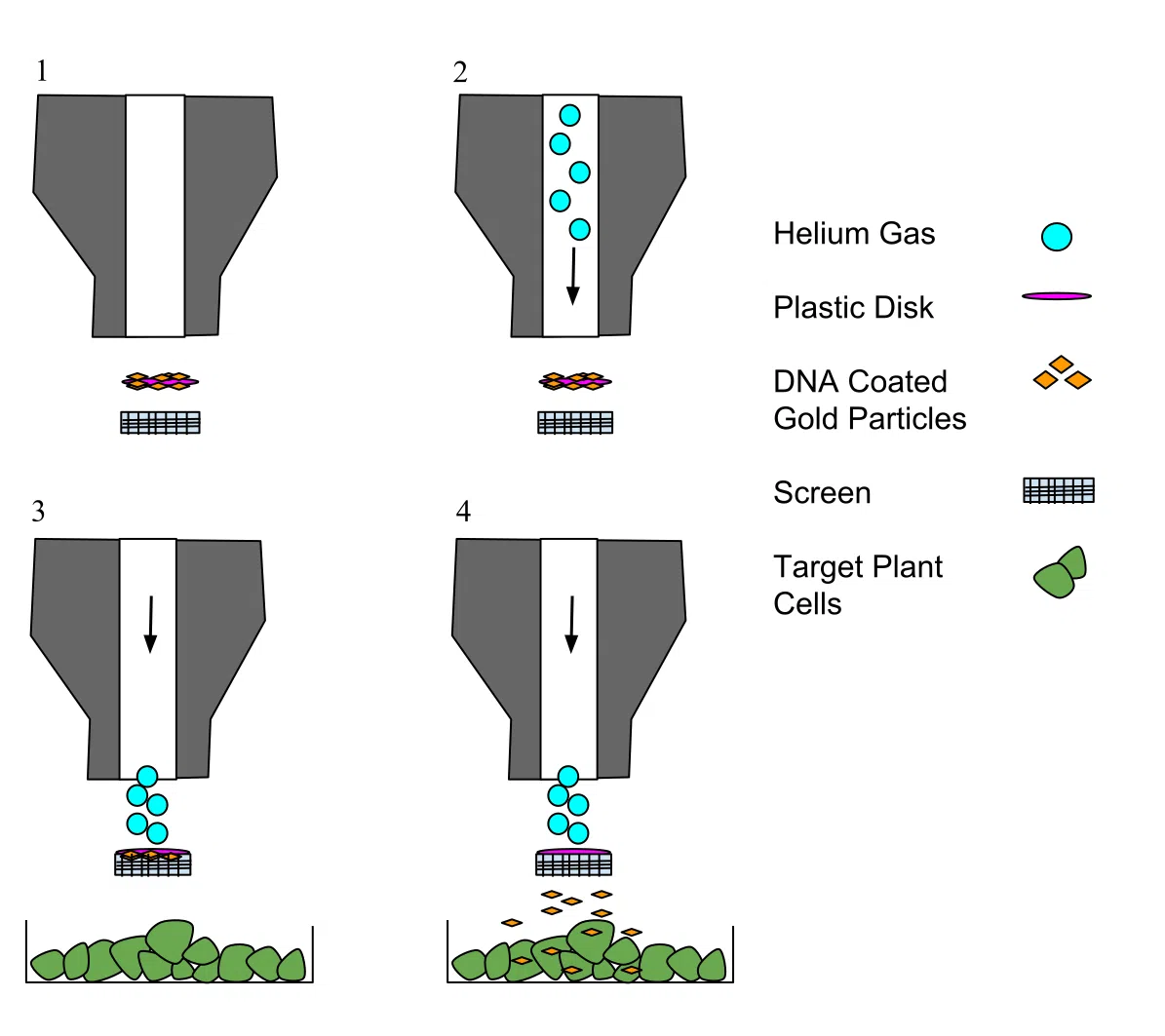
The gene gun is a method that is delightful in its simplicity. It is literally a small cannon, just with very tiny projectiles. The dust it fires into cells consists of heavy metal particles (tungsten, gold, or silver) coated with genetic material — plasmid DNA that we want to introduce into the cell. Some cells are destroyed and die, but others undergo transformation — the foreign DNA integrates into the nucleus or organelles of the cells and begins to function. This method is used in most cases to modify plants, although it can also be used, for example, to deliver DNA vaccines for humans.
Bacteria, most commonly Agrobacterium, are a group of bacteria with a high capacity for horizontal gene transfer — they are very active natural genetic engineers and have been doing this for millions of years. They possess plasmids that are introduced into the genome of plant cells, causing the synthesis of non-standard amino acids and plant hormones that provide the bacteria with carbon and nitrogen sources. This often leads to the formation of tumors on plant roots, but it also happens that plants, thanks to Agrobacterium intervention, acquire new properties, including ones attractive to humans. A classic example is the sweet potato: all cultivated varieties of sweet potatoes are transformed by Agrobacterium, while untransformed wild varieties are unpalatable.[1] And it was recently discovered that the scale of agrobacterial activity is much broader than previously thought. Thus, naturally transgenic plants include bananas, cranberries, peanuts, pomelo, walnuts, hops, and of course tea.[2] By replacing the genetic material in Agrobacterium plasmids, desired changes can be introduced into the genome (for example, this is how soy and wheat are modified). So opponents of GMOs should be very attentive — finding GMOs is much easier than it seems :).
Modifying tea DNA in the laboratory turned out to be easy, but transforming the resulting cells into viable, leaf-producing plants is another matter. “Regeneration from a tea plant cell to a whole plant is generally very difficult,” says Misako Kato, a plant biochemist at Ochanomizu University in Tokyo.
Another obstacle to applying genetic engineering methods for producing new tea varieties is the public’s aversion to genetically modified food, despite the fact that it has been proven time and again that GMO food is completely safe.
It is worth mentioning why existing decaffeination methods are not ideal. In the case of coffee, we may encounter the Swiss water process, where raw beans are boiled in water or green coffee extract — the caffeine passes into the solution while most other substances remain inside. An alternative is removal using organic solvents (dichloromethane, ethyl acetate) and supercritical carbon dioxide. In the case of tea, there have been some attempts to apply the Swiss water process, which is the most environmentally friendly method of caffeine removal; however, the difference between coffee beans and tea leaves (including theanine content) does not yet allow the Swiss water process to be applied without a significant impact on taste. Using the Swiss water process for young leaves, boiling at 100°C for 3–4 minutes removes 83% of caffeine. However, for older leaves (from the fourth leaf down), up to 10 minutes are needed to remove 80% of caffeine, and although most polyphenols remain in the tea, this has an enormous impact on its taste.
A remarkable, even less explored method of caffeine removal is the use of microorganisms (this time not Agrobacterium) to degrade caffeine. Bacteria from the Pseudomonas and Serratia families isolated from soil near coffee and tea plantations can effectively break down caffeine; however, much more research is needed to determine the appropriate conditions for the industrial application of these bacteria. [3]
“Any mention of genetic engineering in tea is total anathema to tea drinkers,” says Zeno Apostolides, who heads the Tea Research Laboratory at the University of Pretoria in South Africa. So instead of manipulating DNA to create caffeine-free plants, Apostolides hopes to find plants in nature that produce only trace amounts of the substance. Together with colleagues from the Tea Research Institute in Kericho, Kenya, Apostolides plans to screen about 10,000–20,000 tea plants from plantations found in the mountains west of the Great Rift Valley in Kenya. “We could find the target mutant within 1–3 years.”
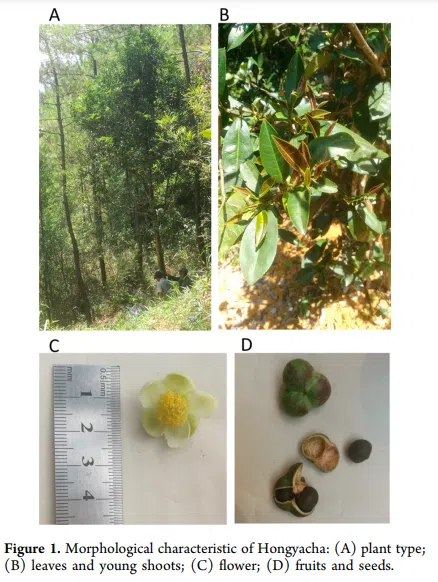
In 2018, Liang Chen and his colleagues from the Tea Research Institute of the Chinese Academy of Agricultural Sciences in Hangzhou described hongyacha (HYC), a naturally caffeine-free variety of C. sinensis that they found in the mountainous province of Fujian. The team demonstrated that in hongyacha, the DNA region controlling transcription of the gene (TCS1) required for the synthesis of both caffeine and its precursor, theobromine, differs from that in normal tea plants. They suggested that this region may have lost part of its function, retaining only the ability to produce theobromine — which may explain why hongyacha is rich in this molecule but contains undetectable levels of caffeine.
Several decades ago, Hung-ta Chang, a botanist at Sun Yat-sen University in Guangzhou, China, found another wild tea plant containing only trace amounts of caffeine in the province of Guangdong, which borders Fujian. However, this plant belonged to a different species (Camellia ptilophylla) and became known as cocoa tea due to its high level of theobromine, which was originally detected in cacao beans (Theobroma cacao). According to Xiaorong Lin, a food scientist who studies compounds in cocoa tea at the South China Agricultural University in Guangzhou, “Tea made from this particular low-caffeine tea species has been sold in China for decades.” But she notes: “Its yield is limited.”[4]
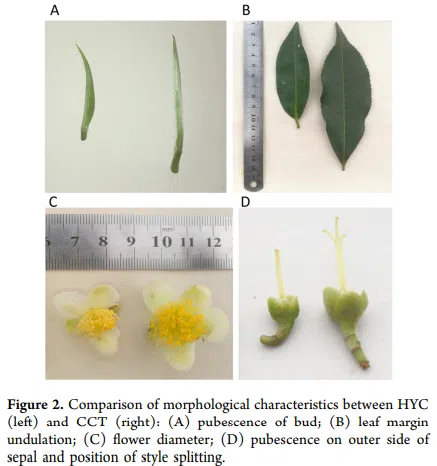
Hongyacha could fill a huge gap in the market, as it is a true tea that contains the same compounds that give caffeinated tea its flavor. Given the potential commercial applications of hongyacha, Liang Chen says he plans to either propagate the wild tea or introduce the mutation into existing tea varieties using classical breeding techniques.
Title photo: yunnan sourcing