· Scientific articles · 3 minutes
Influence of processing method and tea cultivar on the aroma characteristics of oolong tea
Oolong tea is characterized by a multi-step production process, where each change in the process can yield an entirely different product. A new article in Food Chemistry: X examined how processing methods and tea plant cultivars influence the aroma characteristics of oolong tea.
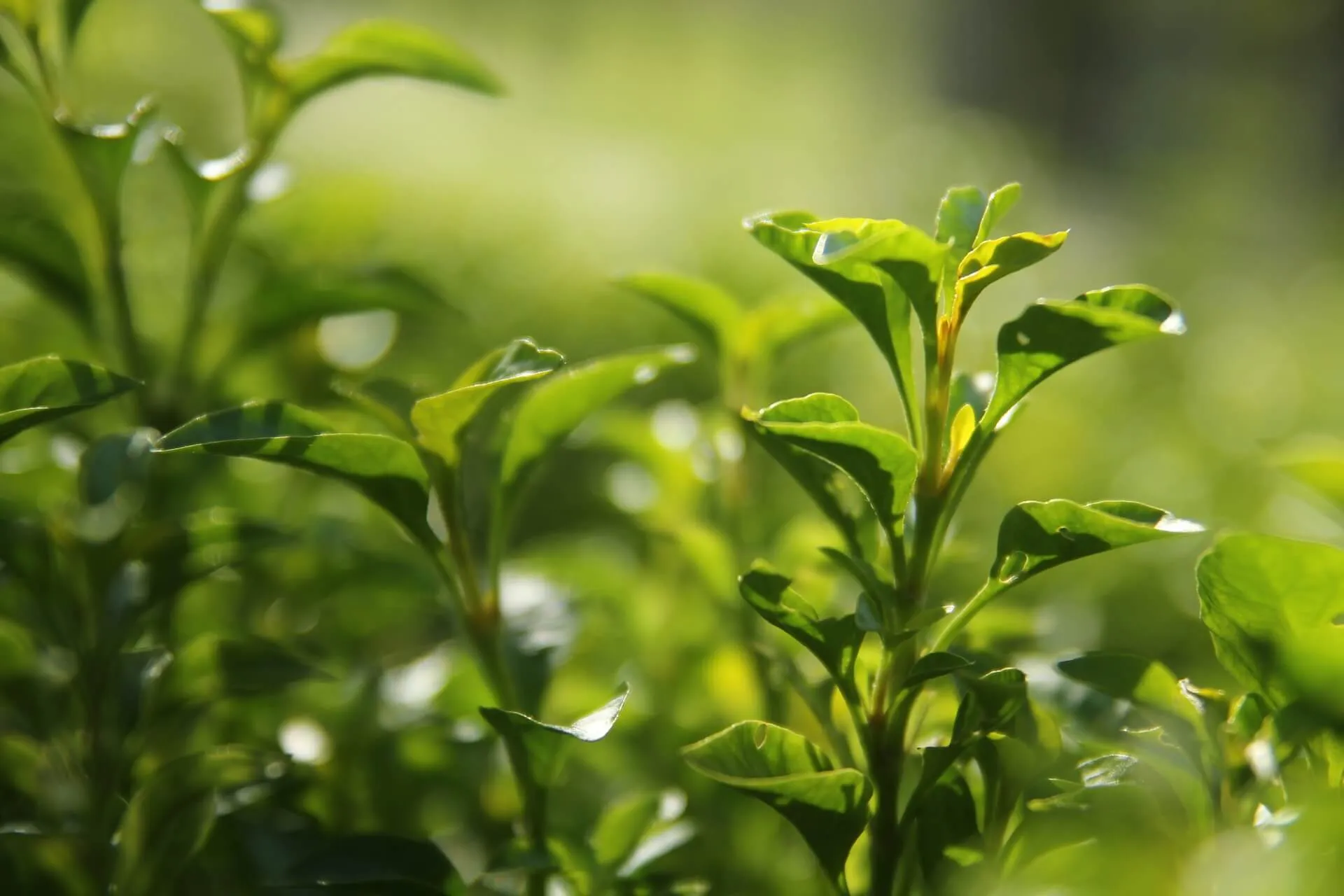
The study analyzed six tea varieties processed using the qingxiang (清香) method, meaning less oxidized and roasted, most often in an electric oven, resulting in a fresher and more floral flavor. This is a more modern method that is particularly widespread in Fujian province. Three varieties are classically used for oolong tea production:
- Huangdan (a cultivar from Anxi, used to produce Huang Jin Gui),
- Tieguanyin
- Meizhan (besides oolongs, also used for green and black tea production), And three are not:
- Fuding Dabaicha (white teas, especially Bai Hao Yin Zhen)
- Yingshuang (an early cultivar that is a cross between Fuding Dabaicha and the large-leaf variety Yunnan Da Ye Zhong, primarily used for green tea production)
- Jiaming 1 (green teas, a cultivar from Zhejiang province).
GC-MS analysis identified 47 aromatic compounds that differentiated between suitable and unsuitable varieties. Suitable varieties had higher levels of volatile terpenoids, amino acid-derived volatiles, and fatty acid-derived volatiles associated with floral and fruity aromas. The leaf-tossing stage, which initiates oxidation, was found to be crucial for oolong tea aroma formation, with volatile content increasing significantly at this stage compared to leaves left without tossing. Aroma extract dilution analysis identified 17 intense odorants that differentiated the tested varieties. This technique is particularly interesting because it combines an instrumental method with human assessors to evaluate the odors of individual dilutions, allowing estimation of aroma intensity.
Substances such as indole and jasmine lactone were present in higher concentrations in suitable varieties. Sensory analysis showed that suitable varieties also scored higher in floral and fruity aromas (indole, benzaldehyde, methyl salicylate, (E)-nerolidol, geraniol, jasmine lactone, benzyl alcohol, beta-ionone, linalool, beta-cyclocitral), while all varieties had similar scores for fresh aroma (mainly aldehydes: heptanal, (E)-2-octenal, (E)-2-nonenal, (E,E)-2,4-decadienal). Floral aroma generally proved to be strongly correlated with overall aroma quality. It is also worth noting that besides instrumental analysis, aroma intensity was evaluated by brewing in a gaiwan (5g of tea per 110 mL of water), and the results were consistent.
The most interesting part of the article is the detection of interactions between aromatic compounds that affect sensory perception, as fresh-smelling compounds mask floral and fruity aromas, while floral and fruity compounds improved the perception of fresh aroma. This partially explains why suitable cultivars are better - the final product contains fewer fresh-smelling compounds, which allows the floral and fruity aromas to reach optimal intensity.
The key conclusions are that oolong tea aroma (in the qingxiang version) is characterized by a fresh base with floral-fruity accents, and that the processing method, particularly the leaf-tossing stage, and the cultivar determine the aroma profile. Understanding the interactions between fresh, floral, and fruity aromatic compounds can provide insight into their influence on overall aroma perception. Research into oolong tea aroma formation pathways can help optimize processing methods and breed improved cultivars.
Source: Chang He et al. The aroma characteristics of oolong tea are jointly determined by processing mode and tea cultivars. Food Chemistry: X, Volume 18, 2023, 100730, ISSN 2590-1575,