· Tea chemistry · 3 minutes
GABA Tea: History, Technology, and Effectiveness
When talking about tea from a chemistry perspective, it would be a crime not to mention GABA teas, which are becoming increasingly popular. GABA, or gamma-aminobutyric acid, serves as the main inhibitory neurotransmitter in the nervous system.
GABA is formed from glutamate — the same compound responsible for the umami taste, often added to various dishes in the form of monosodium glutamate, and sometimes considered very unhealthy by some people. The enzyme glutamic acid decarboxylase (GAD) cleaves a carbon dioxide molecule from glutamate, producing GABA. Benzodiazepines, barbiturates, and even alcohol owe their effects to interactions with GABAergic receptors. However, the question of GABA in tea is controversial.

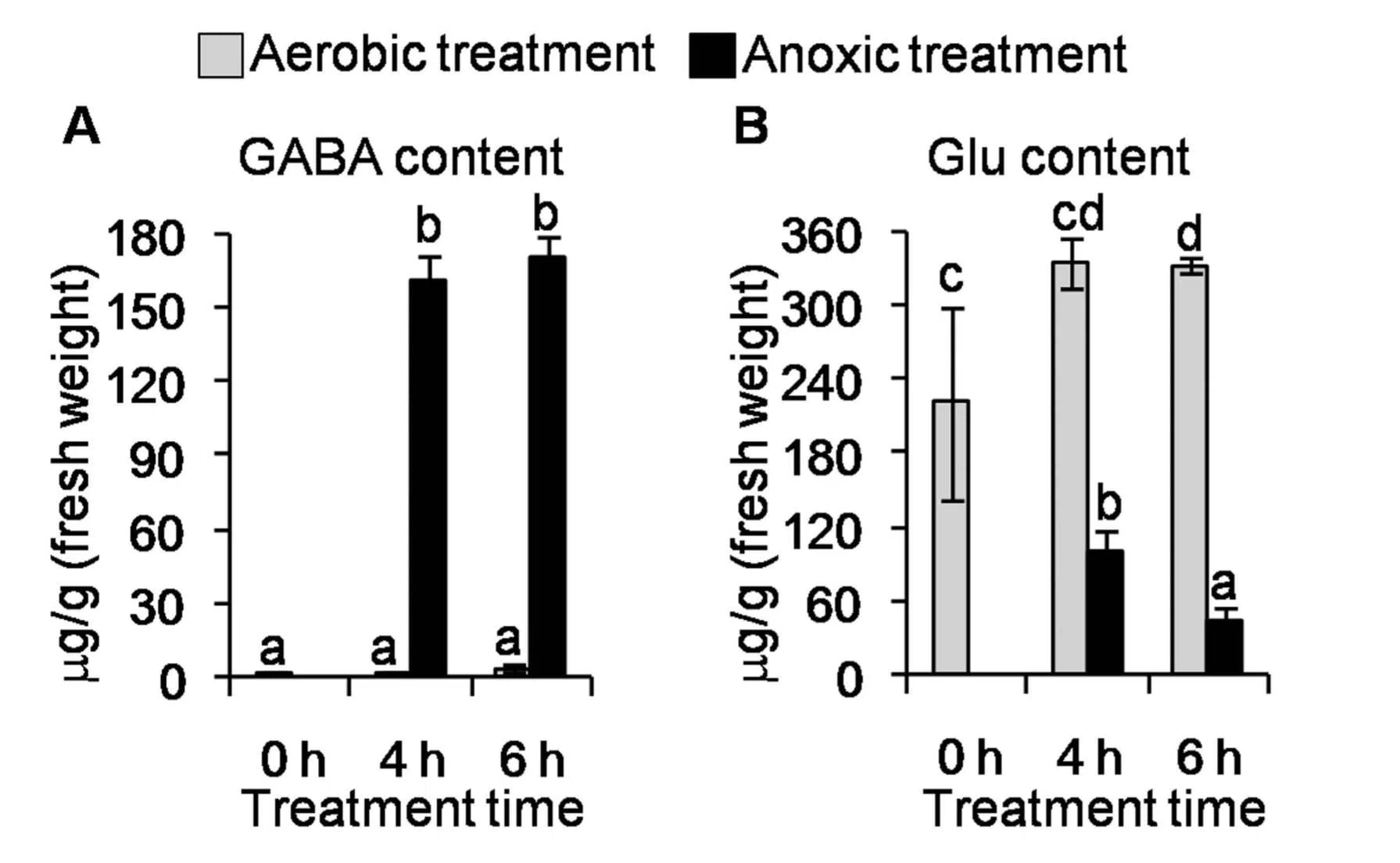
In 1984 in Japan, Prof. Tsushida from the National Research Institute of Vegetables, Ornamental Plants and Tea decided to develop a technology for producing tea with increased GABA content. The technology was presented in 1987 — it turned out that placing tea leaves immediately after harvest in a nitrogen or carbon dioxide atmosphere increases the GABA content on average from 20 to 200 mg/100g, while almost not changing the content of catechins, caffeine, and theanine. Theoretically, any stress (physical factors, viral infections, etc.) alters the biochemical composition of tea leaves, most often increasing GABA concentration. However, the formation of GABA under the anaerobic conditions proposed by Tsushida is a more complicated process.
In tea plants, there are 2 isoforms of the aforementioned glutamic acid decarboxylase — CsGAD1 and CsGAD2. Although they catalyze the same reaction, they differ. Form 1 is activated by the calmodulin–calcium ion complex, and anaerobic conditions increase calcium concentration in the leaves, activating form 1. Mechanical damage combined with anaerobic conditions, on the other hand, activates the expression of form 2. Similar mechanisms are also known in other plants — rice, tomatoes, and tobacco — so it may soon turn out that we will have GABA tomatoes and cigarettes that would supposedly have a calming or even anticonvulsant effect, improve sleep quality, and reduce anxiety, much like drugs that are GABA analogues.
However, it is not enough to simply drink GABA-enriched tea — for it to have any positive effect, it must reach the target organ, which in this case is the central nervous system, and that is not so straightforward. Researchers from New York University, using labeled GABA, discovered that only 8.8% of the administered dose is able to cross the blood–brain barrier — the natural barrier protecting the CNS from damage by toxic substances. Nevertheless, many more studies are needed to assess whether GABA at such low concentrations can have a noticeable effect, since it is extremely difficult to measure changes in substance concentrations in the human brain, and most studies use mice or rats, which affects the measurement results. Additionally, it is possible that GABA may act indirectly through the enteric nervous system (although the concentrations in tea are still much lower than pharmaceutical doses), where GABA receptors are also present, including through interactions with the vagus nerve, which connects the brain and the gut. Let us also not forget the trivial placebo effect.
In summary, the currently available research results are not sufficient to directly state that GABA tea has a beneficial effect on the body, although this cannot be ruled out either. Most available studies confirming the beneficial effects of GABA contain numerous flaws (small test group size, numerous simplifications, and often these are articles by scientists affiliated with companies producing GABA). Drink good tea, regardless of how much GABA it contains!
Sources:
Tsushida T et al., Production of a New Type Tea Containing a High Level of gamma-Aminobutyric Acid, Nippon Nogeikagaku Kaishi. 1987, 61: 817—822.89
DOI: 10.1038/srep23685
doi:10.1016/0028-3908(71)90013-x
doi: 10.3389/fpsyg.2015.01520