· Tea chemistry · 4 minutes
Why green tea is green
The color of tea is often a mark of quality or an identifier of the type of tea – for example, the appearance of the brew of a strongly steamed Japanese green tea already says a lot. It is precisely about the color of green teas that I would like to talk about in this article.
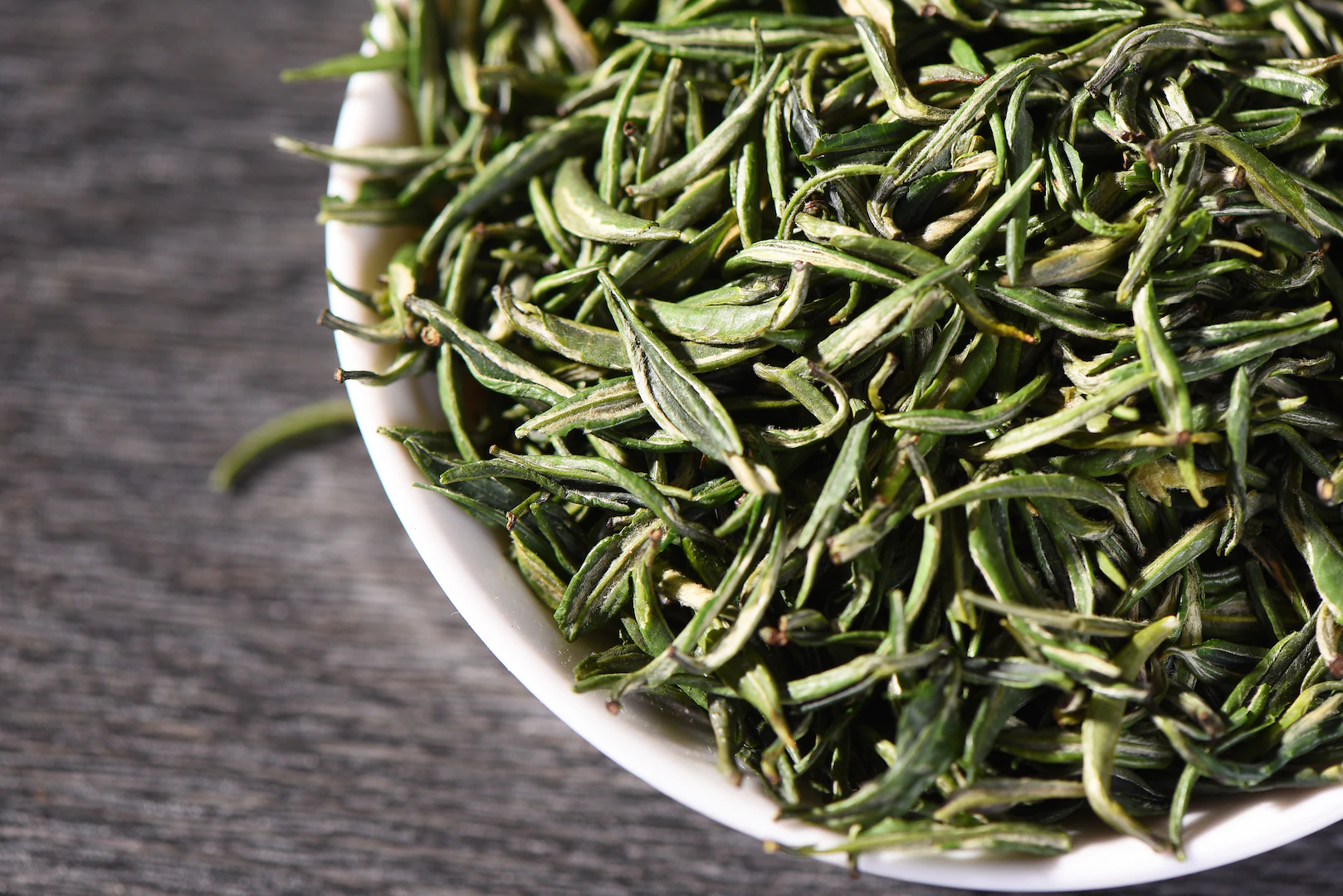
It might seem straightforward – green leaves contain chlorophyll and it is green – but the story is a bit more complicated.
Scientists from Kyung Hee University in Korea decided to investigate which compounds are responsible for the color of various green teas from Jeju Island. The baseline assessment was performed by tasters on a 9-point scale for both tea leaves and the brew. During sensory evaluation, the tasters were instructed to evaluate “the degree of greenness, which can be influenced not only by green elements (a-value) but also yellow ones (b-value).” In earlier studies, the hue angle tan-1(–a/b) was often used to express green color. A decrease in hue angle corresponds to a decrease in greenness and an increase in yellowness. Plotting the hue angle against the content of various substances allows us to assess their influence on the color of tea.
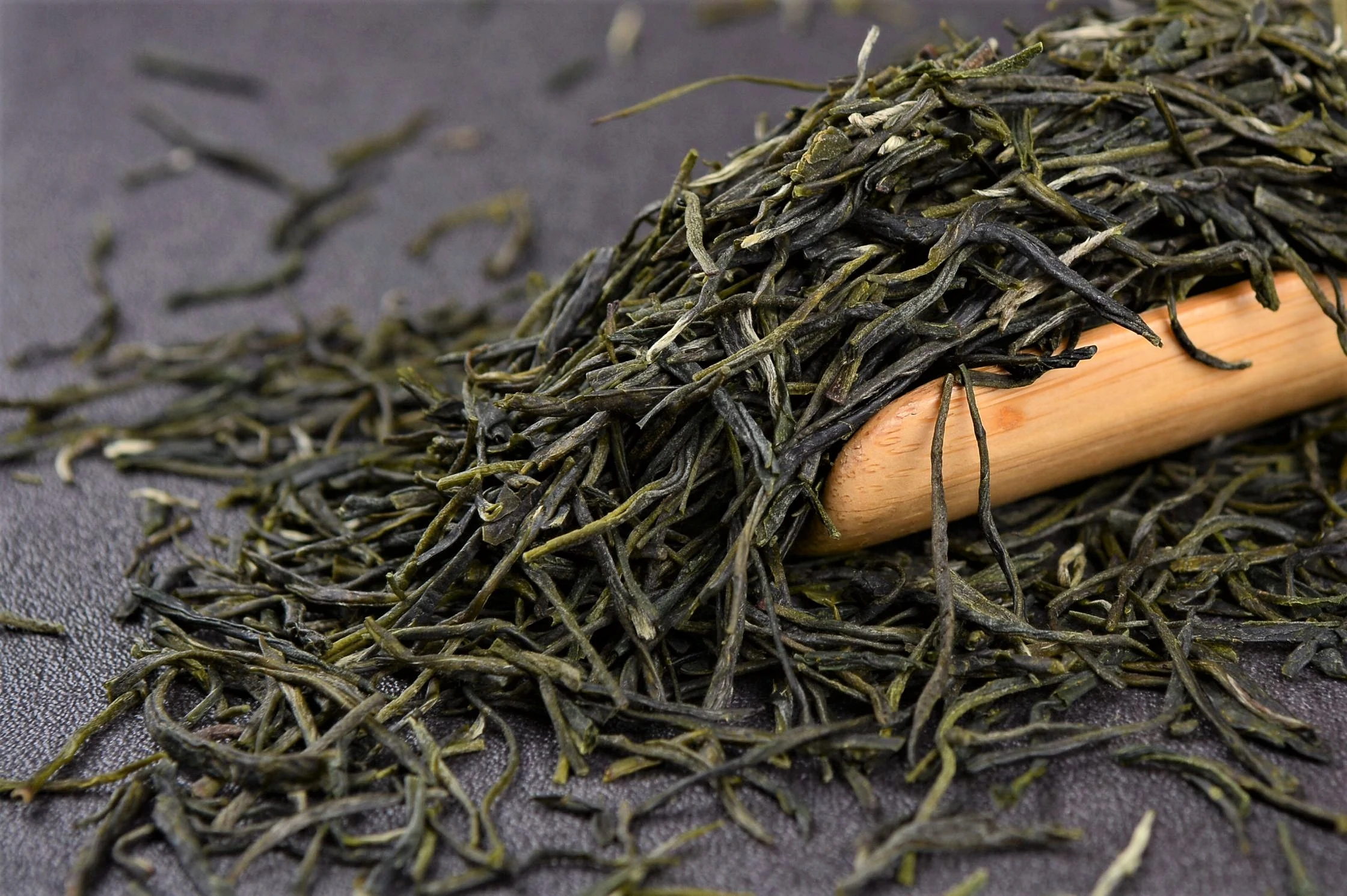
Interestingly, there is almost no correlation between the colors of tea leaves and brews – r2 = 0.4272 (r2 is a statistical measure of how close the data are to the fitted regression line; the closer r2 is to 1, the more linear the relationship between variables). This means that greener tea leaves do not necessarily produce a greener brew.
Undoubtedly the most important compounds affecting the greenness of dry leaves are chlorophylls; the r2 value between their hue angles for dry tea and the total chlorophyll content is 0.8893. It is worth mentioning chlorophyll derivatives here: chlorophylls (water-insoluble) and chlorophyllides (water-soluble) are blue-green colored compounds, while pheophytins (water-insoluble) and pheophorbides (water-soluble) are olive-brown in color. These compounds belong to the tetrapyrrole group, which also includes heme found in red blood cells, responsible for oxygen binding.
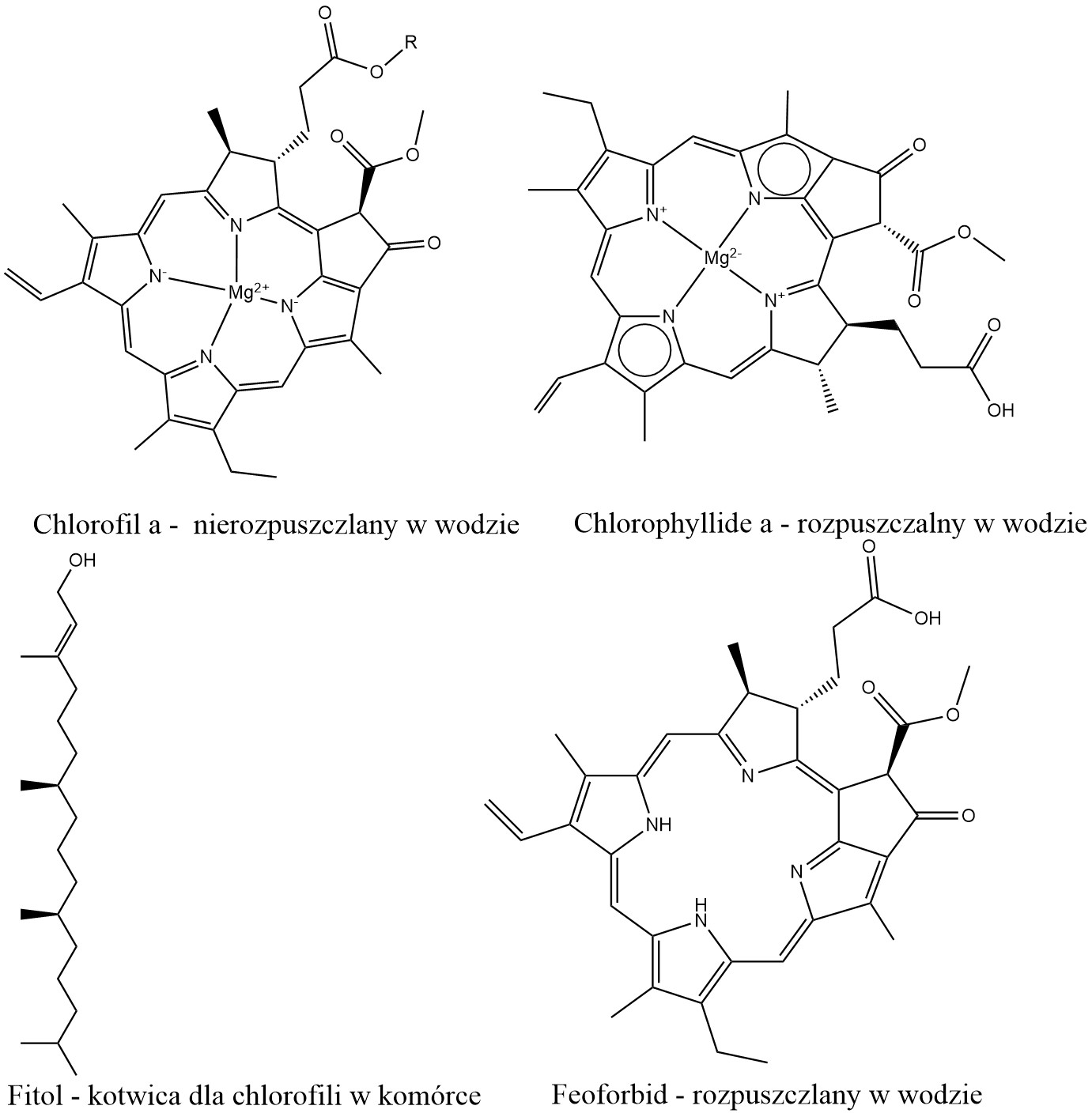
Despite structural similarities, chlorophylls and pheophytins are water-insoluble because they have a phytol residue attached (see figure) – this is a diterpene, a group that also includes steviol, responsible for the sweet taste of stevia. Phytol is very poorly soluble in water and provides anchoring of chlorophylls in the cell; a phytol fragment is also present in the structure of vitamin E. Pheophytins closely resemble chlorophylls, except they lack the central magnesium atom, while pheophorbides also lose the phytol, becoming water-soluble. These two compounds are degradation products of chlorophylls and, together with free magnesium, are responsible for the color change and increased astringency of green teas over time. 5–6 months after harvest, tea can lose up to 50% of its chlorophylls, and after a year, up to 93% undergoes transformation.
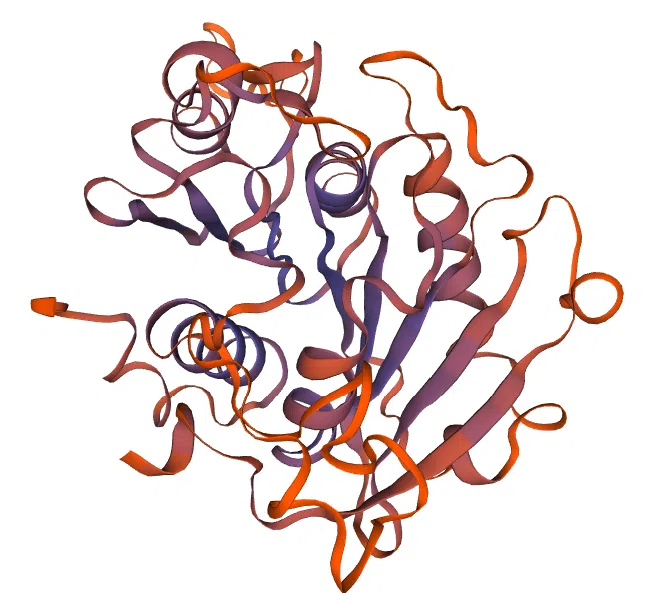
Although it is known that fresh tea leaves have high chlorophyllase activity – an enzyme that cleaves phytol from the chlorophyll or pheophytin molecule – very few chlorophyllides were detected in tea leaf samples, and almost none can be detected in tea brews. Two factors may cause the low concentration of chlorophyllides. First, all enzymes, including chlorophyllase, in fresh leaves are almost completely deactivated under high-temperature fixation conditions. Second, chlorophyllides are very unstable at higher temperatures, so these compounds have almost no effect on brew color.
To study the fate of chlorophylls in teas, pan-fired, pan-fired-and-steamed, and heavily steamed teas were compared. It turns out that pan-fired tea is the greenest in leaf appearance, yet its brew color is the least green. Steaming, on the other hand, damages cell structures, increasing both turbidity and the perception of greenness. Although chlorophylls are water-insoluble, their high availability in steamed teas results in their transfer to the brew and the formation of aggregates as green spheres, which can often be seen in Japanese teas. On average, however, the influence of chlorophylls on brew color is limited (r2 = 0.6061).
Let us now move on to less obvious chemical compounds affecting tea color. Flavonoids are a group of compounds whose correlation with plant colors has been frequently mentioned in earlier studies. Among tea flavonoids, catechins are the most abundant, constituting about 20% of the dry weight of green tea. However, these compounds are colorless, and their oxidation products contribute to the redness in more oxidized teas.
Flavonols are another group of tea polyphenols, which make up 2% to 3% of water-soluble solids in green tea. The highest concentrations in tea are of quercetin, kaempferol, and myricetin, with quercetin being the most abundant. Quercetin itself has a light green color with a hint of yellow, and its contribution to the greenness of tea brew cannot be ignored. The correlation between quercetin concentration and the hue angle of the brew was decidedly the highest (r2 = 0.7647) among these three tea flavonols, and the r2 value can even reach 0.8486 if brew colors were expressed solely by the green value a, making quercetin one of the most important compounds for tea color.
Title photo: yunnan sourcing