· Tea chemistry · 4 minutes
Fungi and bacteria in heicha teas
I didn't expect such interest in the previous post, so I decided to continue this series and talk about bacteria and especially fungi in heicha teas, that is dark teas, and do it as soon as possible. Two articles published in March 2021 and January 2022 in the journal Trends in Food Science & Technology will help me with this.
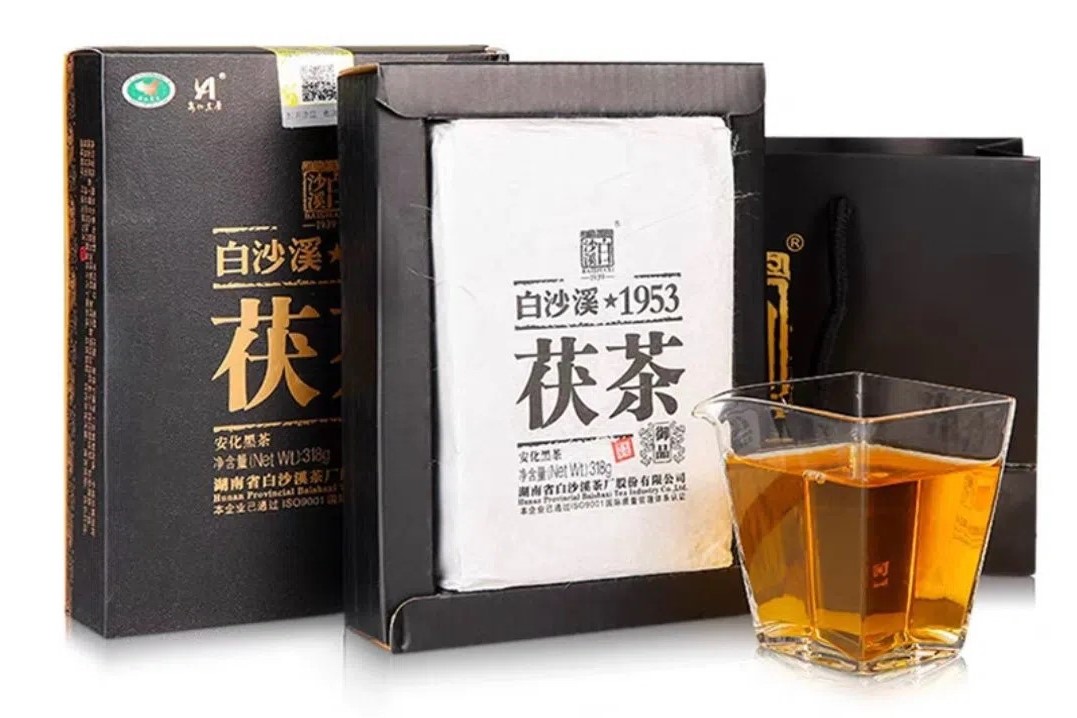
Dark teas, despite their differences, all undergo a semi-fermentation process in large piles, resembling the process of silage production. The production technology of these teas, after certain modifications were introduced, formed the basis for the production technology of shu puer, so in the case of heicha as well, the influence of bacteria and especially fungi is very significant.
In heicha teas, production differences often come down to different drying or pressing processes. For example, teas from Anhui produced before the Mao era were pressed into bamboo baskets, and later, after a break in production, they were not pressed, but with the growing popularity of puer teas, pressing is gradually being reintroduced. Teas from Hunan are pressed and dried at elevated temperatures, creating optimal conditions for fungal growth. Meanwhile, teas from Guangxi are placed in large bamboo baskets weighing up to 60 kg.
During the semi-fermentation process, the microbiological composition of the tea is very similar to that of puer teas during the wodui process. A warm (up to 60 degrees), humid environment promotes the growth of similar but distinct microorganisms. Microorganisms from the genera Aspergillus, Bacillus, Lactobacillus, Lactococcus, Lichtheimia, and Penicillium are present in both the semi-fermentation process of puers and heicha teas, while Candida, Cyberlindnera, Debaryomyces, Klebsiella, Eurotium, Rasamsonia, and Uwebraunia have been identified exclusively in heicha. From a chemistry standpoint, the presence of the fungus Aspergillus sydowii during heicha production is interesting, as it can effectively convert caffeine into theophylline, lowering the caffeine content in the finished product. These fungi could be used in the industrial production of theophylline, which is used in the treatment of respiratory diseases.
Equally important for heicha teas is aging, during which the tea undergoes complex biochemical transformations that alter its properties. Eurotium cristatum is the dominant fungal species during heicha aging. The amount of yellow growth of this fungus is often considered a mark of quality, and this is partly supported by science, as it contributes to quality and bioactivity. This fungus is non-toxic and safe for food fermentation; apart from tea, it can also be found in seaweed.
The key reaction pathways for aroma or flavor formation in tea can be divided into three categories:
- Maillard reaction – an important source for black and yellow teas,
- Protein degradation – influencing the taste of green teas,
- Enzymatic and non-enzymatic oxidation – affecting every tea to some degree, but most important for oolongs, puers, and heicha.
During its growth, Eurotium cristatum secretes various enzymes, including α-amylases, polyphenol oxidase, cellulase, pectinase, proteases, etc. These enzymes can, for example, break down complex catechins (EGCG and ECG), resulting in the formation of simple catechins. Furthermore, it has been found that (+)-catechin can be converted into catechin B-ring fission metabolites (BRFC), which are unique to dark teas, for example fuzhuan A. Compared to raw leaves, the content of aldehydes, ketones, and terpene alcohols in dark tea increases significantly. These compounds provide floral and woody aromas, and they mainly originate from the oxidation of fatty acids and β-carotene, as well as the condensation of carotenoids. These processes depend on the presence of Eurotium cristatum and fungi from the genus Penicillium.
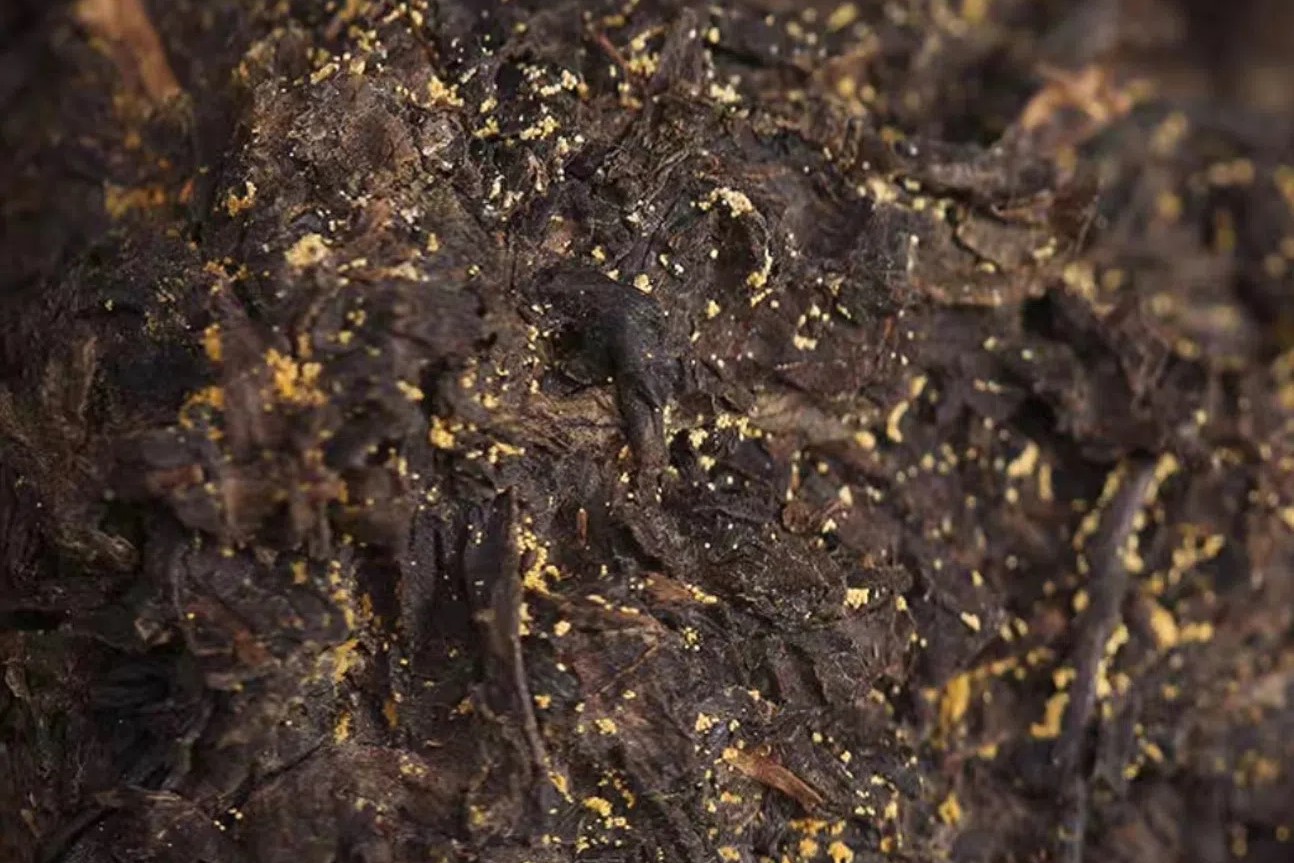
Let us move on to the health-promoting properties, most of which are associated with Eurotium cristatum. Dark tea can increase the expression of the SREBF1 gene, which is involved in the control of lipid synthesis and may be a target in the treatment of obesity and hyperlipidemia. It can prevent lipid accumulation in the liver by altering sugar metabolism and regulating the expression of enzymes controlling gluconeogenesis and glycolysis. The antioxidant activity of dark tea is attributed to polysaccharides and indole alkaloids from EC. As with any (semi-)fermented product, its influence on the gut microbiome, which can affect the entire body, must be mentioned. Polyphenols and polysaccharides from Eurotium cristatum are poorly bioavailable in the small intestine, and those that are not absorbed can be degraded and utilized by the gut microbiota in the large intestine, increasing the population of bacteria in the gut, such as Lactobacillus and Bifidobacterium. (in the intestines of mice)
So even a single fungal strain can significantly alter the effect of tea on the body, although one should always remember that even with beneficial effects, there is still much we do not know about teas, and they should not be treated as medicine. It is better to rely on established pharmacological solutions while not forgetting to drink good tea.